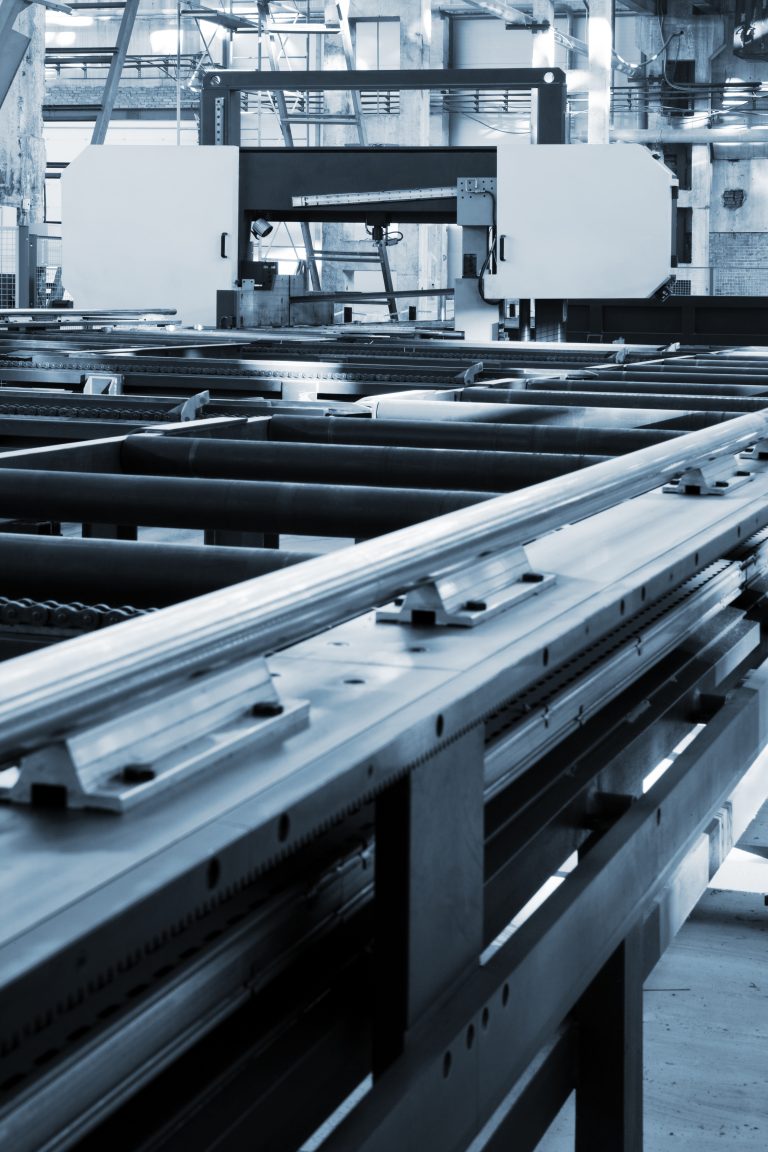
Aluminium extrusion is a manufacturing process that shapes aluminium by pushing it through a specially designed tool, called a die, in the solid state. The die determines the final profile, allowing manufacturers to produce long, uniform pieces with precise dimensions. You can see extruded aluminium in buildings, vehicles, industrial machines, furniture, and countless other applications.
The extrusion of aluminium is popular because it produces components that are both strong and lightweight, making them ideal for a wide range of industries. This process also allows for flexible, custom designs, meaning designers can create everything from simple rods to complex profiles with multiple channels, grooves, or decorative patterns.
Why Aluminium Extrusion Matters
Lightweight and Strong
Aluminium is naturally light, yet it maintains remarkable strength. This combination makes aluminium extrusion highly useful in automotive and aerospace industries, where reducing weight improves fuel efficiency, handling, and overall performance. Think of it as using a steel beam to support a structure, but at a fraction of the weight.
Corrosion-Resistant
One of the advantages of aluminium extrusion is that the metal naturally forms a thin protective oxide layer that resists rust and corrosion. This makes extruded profiles ideal for outdoor structures, marine applications, and any environment exposed to moisture or changing weather. Unlike steel or iron, aluminium can last decades with minimal maintenance.
Precision and Flexibility
It allows the creation of intricate shapes with tight tolerances. Manufacturers can produce channels, slots, and decorative patterns in a single piece. This flexibility makes aluminium extrusion suitable not only for structural applications but also for consumer products like furniture, electronic casings, and custom industrial equipment.
Efficient Production
Once a die is created, aluminium extrusion can produce long, identical profiles quickly and efficiently. It is faster and more cost-effective than other methods like machining, casting, or cutting, making it ideal for large-scale production while maintaining consistent quality.
Aluminium Extrusion Process – From Billet to Finished Product
The aluminium extrusion process transforms a solid aluminium billet into a high-quality profile through a series of carefully controlled manufacturing steps. Every stage directly influences product quality, productivity, and overall process efficiency.
1. Billet Preheating (450–500°C)
The process begins by heating aluminium billets in a gas or induction billet furnace to the required extrusion temperature, typically 450–500°C, depending on the alloy.
Purpose:
- Ensure optimum metal flow during extrusion.
- Achieve uniform billet temperature throughout its length.
- Reduce extrusion force and improve surface quality.
- Maximize productivity while preventing overheating.
2. Die Preparation & Preheating (460–490°C)
The extrusion die is preheated before installation in the press to approximately 460–490°C. Proper die temperature minimizes thermal shock and extends tooling life.
Purpose:
- Protect the die from thermal cracking.
- Improve metal flow.
- Produce consistent profile dimensions and surface finish.
- Increase die life and reduce correction time.
3. Extrusion (Billet 450–500°C | Profile Exit 500–580°C)
The heated billet is loaded into the press container and forced through the die by a hydraulic ram. The aluminium exits the die in the required cross-sectional shape.
Purpose:
- Form the required profile geometry.
- Control ram speed, pressure, and metal flow.
- Achieve maximum productivity while maintaining excellent surface quality.
- Minimize scrap and extrusion defects.
4. Run-Out & Controlled Cooling (Profile Exit 500–580°C → Cooling to 40–80°C)
After leaving the die, the profile is transferred onto the run-out table, where it is pulled, supported, and cooled using air, water mist, or fans.
Purpose:
- Maintain profile straightness.
- Control the cooling rate to achieve the desired mechanical properties.
- Prevent twisting, distortion, and surface defects.
- Prepare the profile for stretching.
5. Stretching (Typically below 40–60°C)
Once sufficiently cooled, the profile is stretched by approximately 0.5–2.0% of its length to remove residual stresses and correct any distortion.
Purpose:
- Eliminate twists and bends.
- Improve straightness and dimensional accuracy.
- Release internal stresses created during extrusion.
- Prepare profiles for final cutting.
6. Finish Cutting
After stretching, profiles are cut to the required customer lengths using precision saws.
Purpose:
- Produce accurate finished lengths.
- Remove profile ends affected during stretching.
- Minimize scrap and prepare material for ageing or fabrication.
7. Ageing (Artificial Heat Treatment) (175–185°C)
Profiles are placed in an ageing oven at 175–185°C for a controlled period, depending on the alloy and required temper (T5, T6, T66).
Purpose:
- Increase mechanical strength and hardness through precipitation hardening.
- Achieve the specified temper.
- Ensure stable and repeatable mechanical properties.
- Meet customer and international standards (EN, ASTM, etc.).
8. Quality Inspection
Throughout the production process and after ageing, profiles undergo quality inspections.
Typical inspections include:
- Dimensional measurements
- Surface quality assessment
- Straightness verification
- Mechanical property testing
- Hardness and tensile testing
- Visual inspection for defects
Purpose:
- Ensure compliance with customer specifications.
- Detect and eliminate defects before shipment.
- Maintain consistent product quality.
9. Surface Finishing (Optional)
Depending on customer requirements, profiles may undergo additional finishing processes.
Typical processes:
- Anodizing
- Powder coating
- Polishing
- Brushing
Purpose:
- Improve corrosion resistance.
- Enhance appearance.
- Increase durability and wear resistance.
10. Fabrication & CNC Machining (Optional)
Many extrusion plants provide value-added operations after extrusion.
Typical operations:
- CNC machining
- Drilling
- Milling
- Tapping
- Precision cutting
- Assembly
Purpose:
- Deliver finished components ready for installation.
- Reduce customer processing time and cost.
11. Packaging & Shipping
Finished profiles are carefully packed, labelled, and protected for transportation.
Purpose:
- Prevent scratches and mechanical damage.
- Maintain traceability.
- Ensure products reach the customer in perfect condition.
Operational Excellence Begins with Process Control
Every stage of the extrusion process is interconnected. Consistent temperature control, standardized operating procedures, skilled personnel, and continuous process monitoring are the keys to achieving high productivity, outstanding quality, low scrap rates, and safe, reliable operations. Even the most advanced extrusion press cannot deliver world-class performance without disciplined control of every step in the process.
Careful control of each step is critical. Mistakes in temperature, pressure, or die alignment can affect the entire batch, reducing quality and increasing waste.
Applications of Aluminium Extrusion
- Construction – Windows, doors, facades, and support structures benefit from aluminium extrusion due to its strength, light weight, and corrosion resistance. Architects also favor aluminium for its ability to create sleek and modern designs.
- Automotive and Aerospace – Vehicle frames, chassis, roof rails , battery components airplane components use extrusion of aluminium to reduce weight while maintaining structural integrity. Complex profiles can be integrated into systems with minimal assembly.
- Industrial Machinery – Extruded aluminium profiles provide structural support for machines and equipment. Custom profiles allow manufacturers to meet exact specifications without excessive machining, saving time and cost.
- Consumer Products – Electronics, furniture, and home appliances often rely on extruded aluminium for durable and precise components. The flexibility of the extrusion process allows for innovative designs that would be difficult to achieve with other methods.
Contact
If you want to improve your extrusion processes, optimize production,imporve productivity and reduce scrap rate or plan a new plant, expert guidance can help. With years of experience, practical solutions can be tailored to your company’s needs.
Whether it’s a consultation, process audit,die design and shop improvement or team training, reaching out is the first step toward better efficiency, higher quality, and safer operations.